


© SOLLYS DESIGN

How to Choose the Better Dining Table for Your Singapore House
2025.10.03
Hello. I’m Ishii from Sollys Design, an interior design studio based in Singapore.
When moving into a new home in Singapore, many people choose to source their dining table locally.
The dining area is the “heart of the home” and a space for entertaining guests. Because it’s a large area, the dining table has a big impact on the room’s overall impression, and since it’s used daily you’ll want to pay attention to both function and design. Below, we share professional tips for choosing a dining table that suits Singapore’s living environment.
*If you’re intent on a specific dining table: even in furnished rentals, it’s sometimes possible—depending on negotiation before signing the lease—for the owner to provide a budget so you can buy your own furniture. Check the article below for more details.
How to choose a dining table with Singapore’s living environment in mind
Flooring differences between Japan and Singapore
While Japanese homes often feature wood-grain flooring or carpeting, tiles and marble are more common in Singapore.
Tiles and marble convey a sense of luxury and a modern feel, but the natural, warm furniture aesthetic popular in Japan can sometimes feel out of place depending on the choice of pieces.
Things to check before purchasing a dining table
Start by estimating the appropriate table size based on the dining room’s area and layout. It’s important to check circulation space with chairs in place.
An often-overlooked consideration is the delivery route. Some condominiums or HDBs have small elevators or narrow front door openings. At our firm, we always check the delivery route during site visits and recommend sizes that can be installed without issues.
Understand the types of dining tables available
Number of seats and size
The first question when choosing a dining table is: how many people need to be seated? Consider not only family size but also how often you entertain guests and whether you plan to host dinner parties or cooking classes—i.e., your lifestyle.
Typical size guidelines are as follows:
- 4-seater: about 150 cm wide (two people per side)
- 6-seater: about 180 cm wide (two people per side plus one at each end) — or about 230 cm wide (three people per side)
Rectangular tables are common, but round tables are also a popular option in Singapore.
Dining table materials
There are three main material categories, each with its own characteristics, advantages, and disadvantages.
① Wood
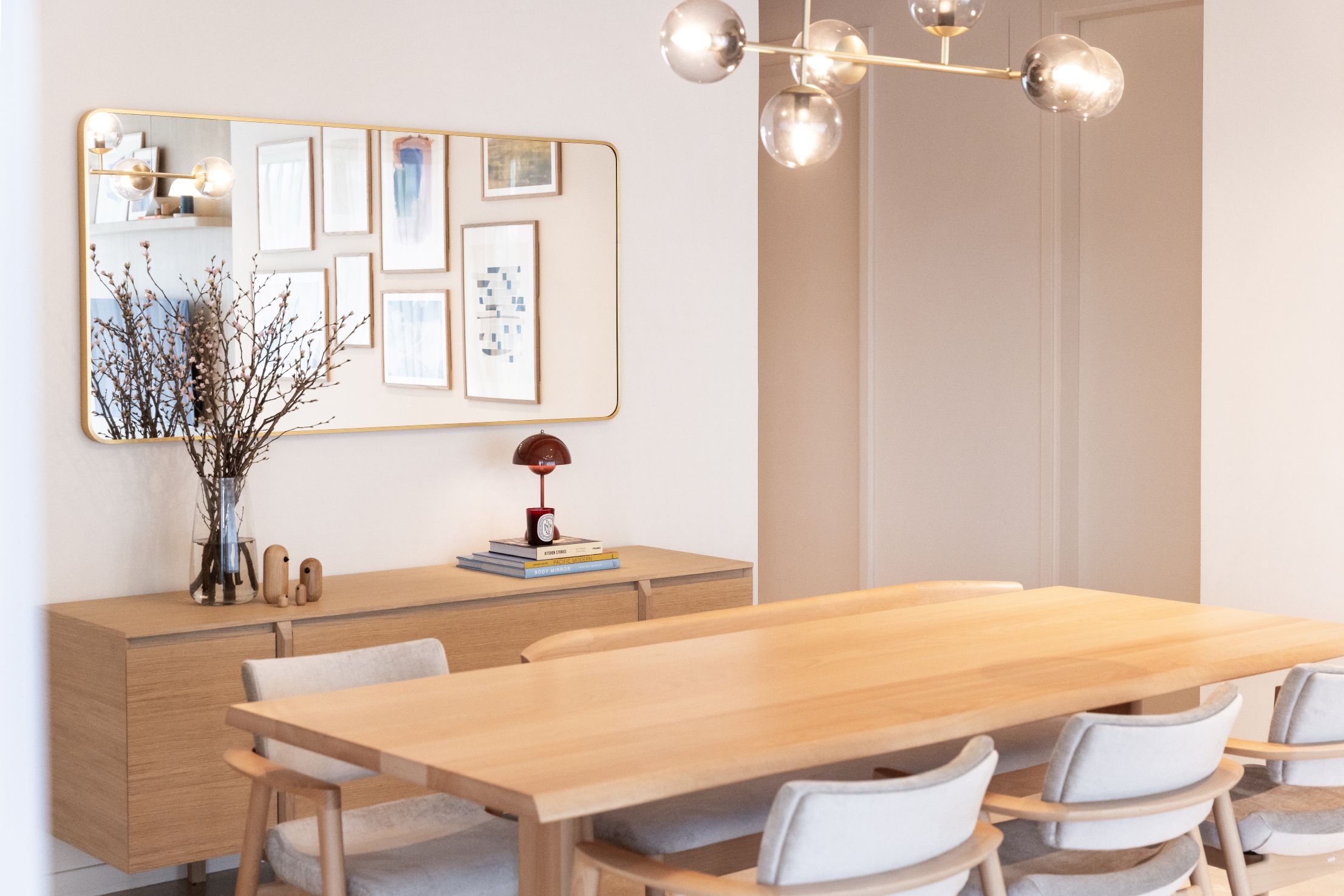
- Solid wood: Cut from a single piece of timber. It offers warmth and a sense of solidity, and develops attractive aging over time. Scratches and stains can be repaired by sanding or refinishing, giving it generational durability. However, it tends to be more expensive.
- Veneer: Thin slices of natural wood glued onto plywood or MDF. It looks similar to solid wood, is lightweight, resistant to warping or cracking, and more cost-effective. However, the surface is thin and vulnerable to deep scratches or water damage, and repairs are difficult.
② Stone
- Natural stone: Marble, granite, etc., with unique natural patterns and colors. They offer high-end presence but can be sensitive to acids and moisture, and may stain or scratch easily.
- Engineered stone: Made from natural stone powders and resin. It has excellent stain resistance and low water absorption, making it practical for daily use. It offers consistent patterns and many options, and is suitable for households with children, though it lacks the one-of-a-kind character of natural stone.

③ Glass
Glass provides transparency that makes a space feel larger and brighter. It creates a modern, airy look and pairs well with legs made from other materials. Spills are easy to wipe clean, but fingerprints and water marks show easily, and fine scratches are common. Tempered glass increases safety, but households with small children should exercise caution.

Compatibility between the table and chairs
When selecting a table, always consider how it pairs with chairs. If you purchase from the same brand, heights are likely to match, but mixing brands or combining a Japanese-made table with Singapore-made chairs requires caution.
Table heights in Singapore are generally 74–76 cm, following Western standards, while Japanese tables are typically lower at 70–72 cm. Because of this difference, checking chair compatibility is essential. The height difference between the chair seat and the table top—known as the “seat-to-table gap”—is most comfortable at 27–30 cm. If the gap is too large or too small, eating or working at the table becomes uncomfortable, so adjust based on your family’s heights and body types.
The position of the table legs is another important point. Legs that block legroom or prevent armchairs from fitting can become a daily annoyance. Be sure to simulate the setup before purchasing.
Summary
In this article we covered how to choose the ideal dining table for Singapore residences. Prices vary widely depending on material, size, and brand.
The article below lists price ranges for dining tables & chairs, sofas, and other furniture items across three budget tiers—please refer to it as well.
▶︎ Also see: Shop guide: furniture price ranges in Singapore
At Sollys Design we provide full interior design services tailored to each client’s lifestyle—not only for dining table selection but for creating your ideal home. If you are planning a move to Singapore or preparing to relocate within the island, please feel free to consult with us.

Recent Topic



Sollys Interior Design Pte. Ltd.
30 Petain Road Singapore 208099, Singapore, 208099